Origin
Why the valleys taste different
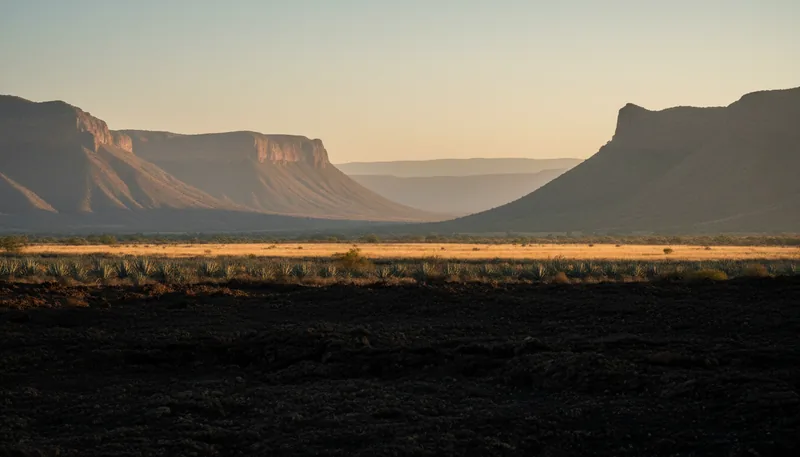
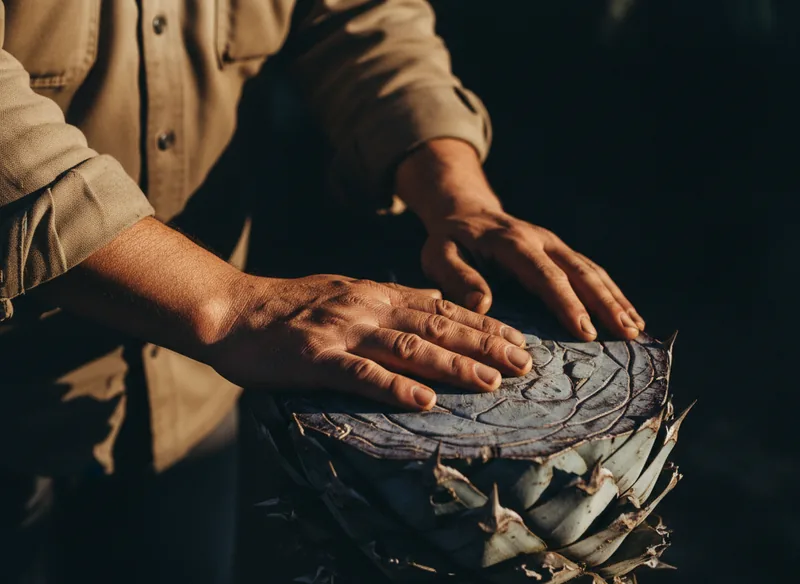
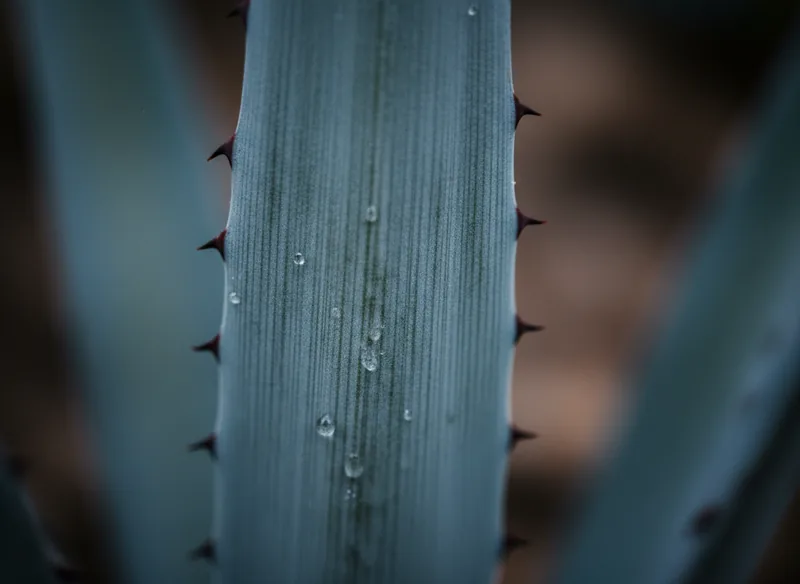
Highland agave ripens sweeter and rounder; valley agave ripens earthier, more herbal, more savoury. Neither is better. Only one of them is Almaura.
Read
Jalisco grows agave in two broad landscapes. In Los Altos, the highlands, red clay soil and cooler nights tend to give fruitier, sweeter, more floral tequilas. In Los Valles, around the Tequila volcano, dark volcanic soil and warmer days tend to give earthier, more herbal, more mineral ones. These are tendencies, not laws — the producer's choices matter as much as the ground. But they are why Almaura leans dry and mineral rather than sweet, and why the valley is printed on the neck.
Design
Drawing a mark into glass
A printed logo can be redesigned in an afternoon. A mark pressed into the mould is a decision you live with for years — which is exactly why it is worth making carefully.
Read
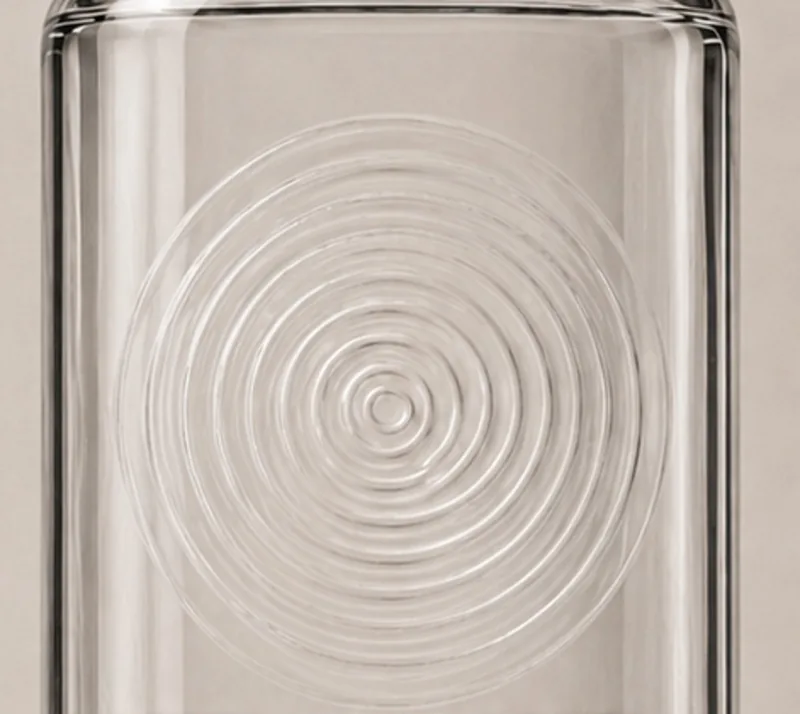
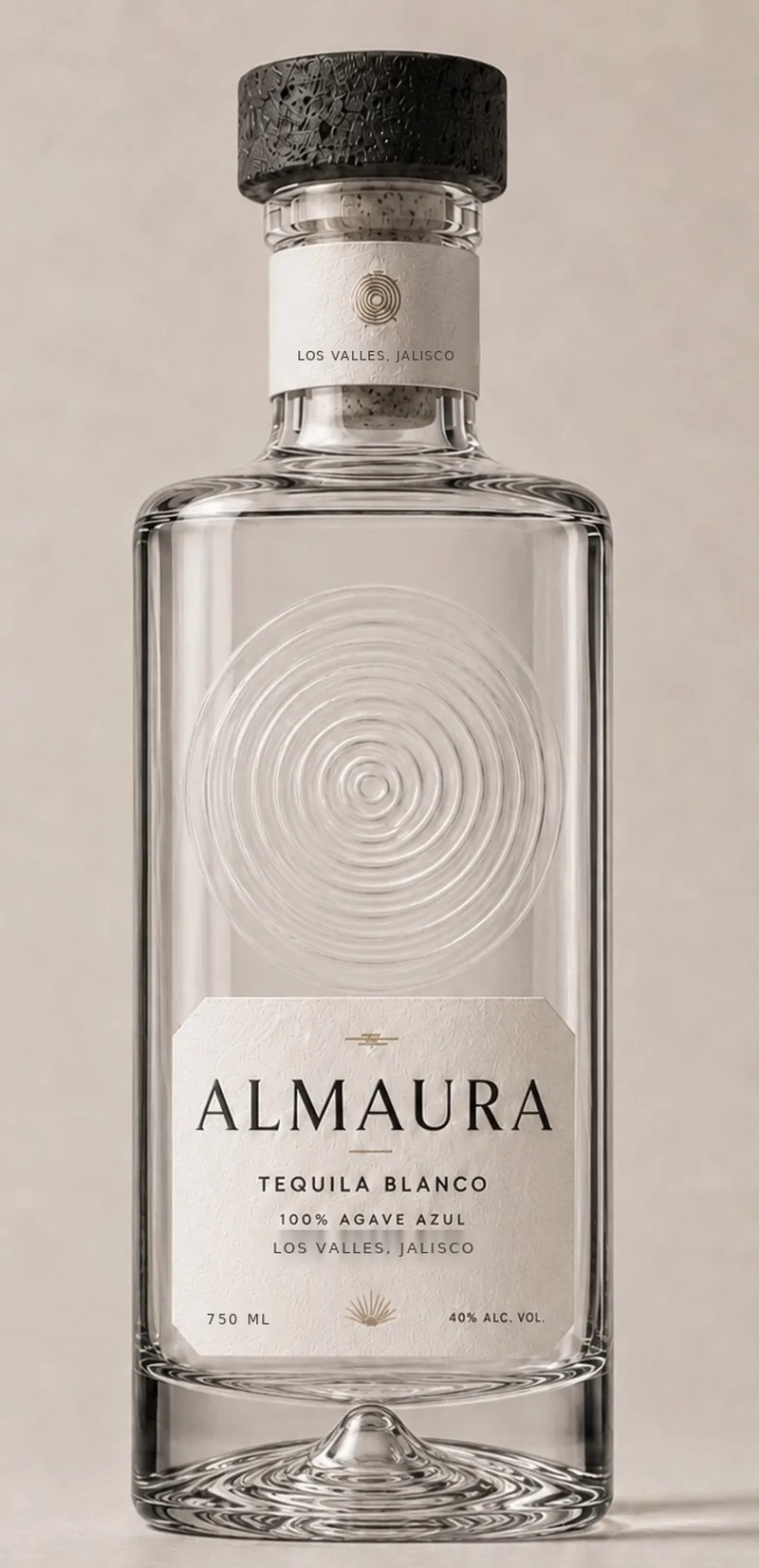
A printed mark sits on a bottle. A moulded one is the bottle. Pressing concentric rings into glass means committing to them before a single unit exists: the mould is cut once, and every bottle afterwards carries the decision. It also changes how the object behaves. Light bends through the rings, the liquid moves behind them, and the mark looks different from every angle. That is the point. A symbol about what remains should not be something you can peel off.
Gastronomy
Blanco at the table
Where an unaged agave spirit sits in a menu: alongside raw fish, citrus, salt, green herbs and anything cooked over fire. Rarely at the end of the meal.
Read
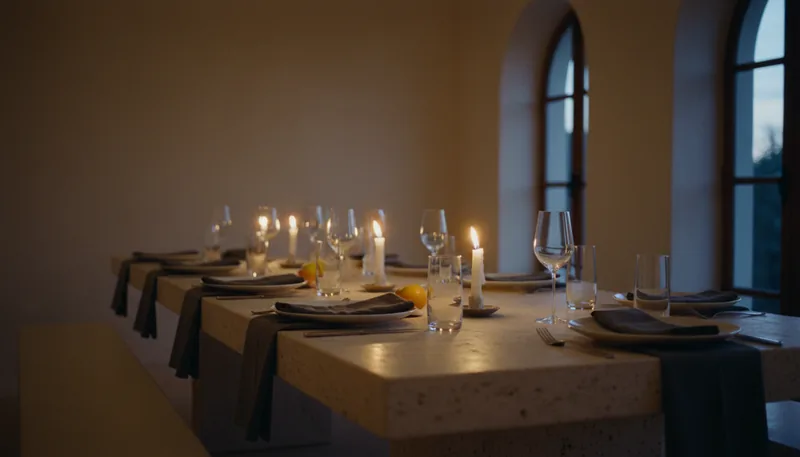
Blanco is the most food-friendly form of tequila because nothing stands between the agave and the plate. Its natural partners are bright and saline: raw fish, citrus, salt, green herbs, fresh cheese, anything off the grill. Serve it the way you would a dry white wine — early, cool rather than cold, in a glass with room for aroma. It struggles next to heavy sweetness, which is why it rarely belongs at the end of a meal.
People
The people who never appear in the campaign
A note on why Almaura does not build a personality cult around a master distiller — and why that is not the same thing as hiding who makes it.
Read
Tequila is made by many hands: the jimadores who harvest, the people at the ovens, the mill, the tanks, the stills. A brand usually picks one face to stand for all of them. We decided not to. No portrait, no signature on the label, no borrowed fame. What we publish instead is the work itself — every step, every parameter, attached to every batch. You cannot follow the maker on social media. You can check everything they did.
Process
The expensive days
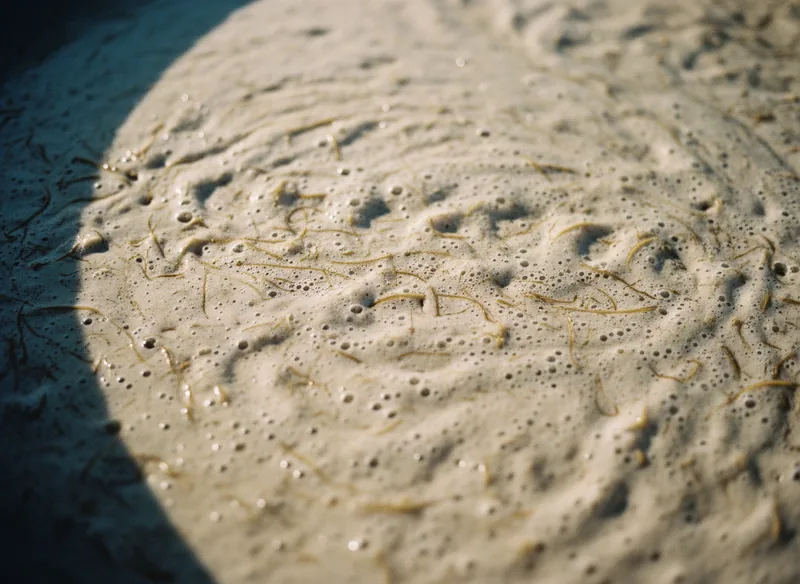
Fermentation is where most of a tequila's aroma is actually made, and the only place where the honest answer to “can we go faster?” is no.
Read
Cooking takes hours. Distillation takes hours. Fermentation takes days, and it is the stage most tempting to shorten: warm the tanks, feed the yeast, and the same sugar becomes alcohol in a fraction of the time. What is lost is aroma. The floral, herbal and fruity notes of a tequila are by-products of yeast working slowly, and they cannot be put back afterwards without becoming additives. So the tanks stay open, and the calendar loses.
Culture
Mexican, without being folkloric
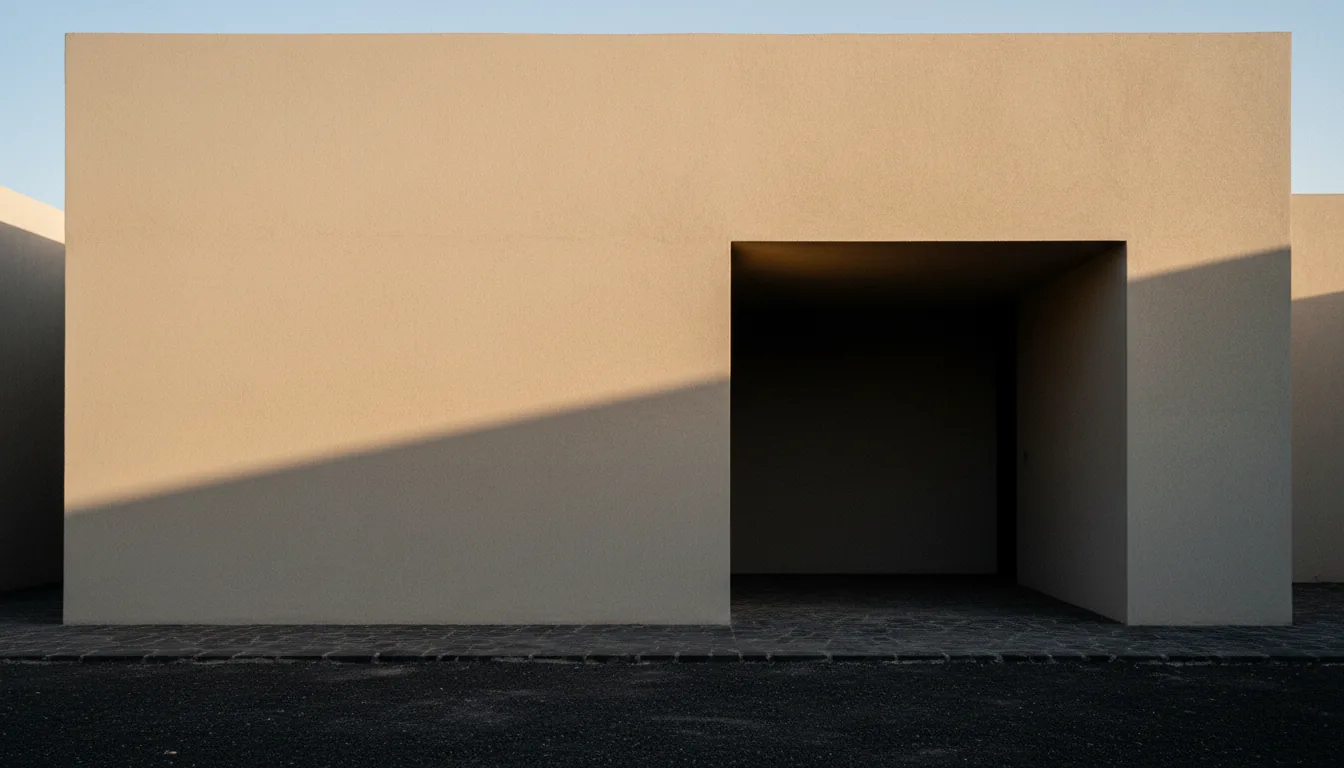
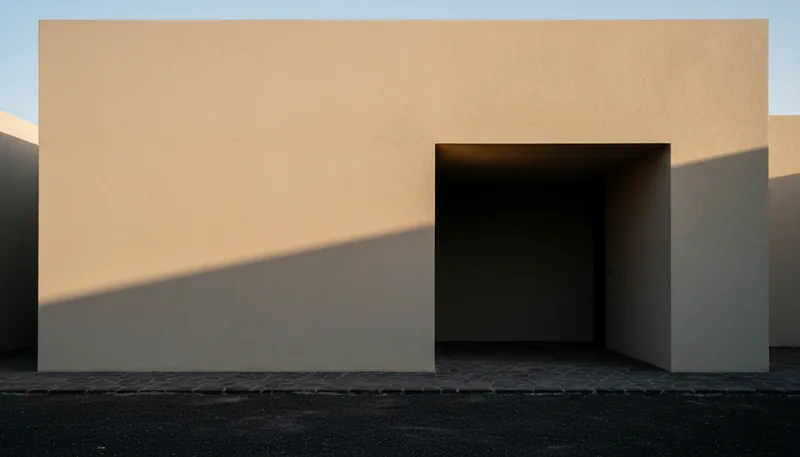
No skulls, no sombreros, no invented hacienda nostalgia. Instead: architecture, volcanic stone, plaster, glass, water, light and geometry.
Read
Abroad, Mexico's visual identity is usually a costume: skulls, sombreros, papel picado. But there is another Mexico, just as real — the architecture of volcanic stone and pigmented plaster, of walls built to hold light, of water, geometry and silence. Almaura takes its language from there. Stone for the closure, mineral paper for the label, glass that moves like water. Nothing about it needs to announce that it is Mexican. It simply could not have come from anywhere else.